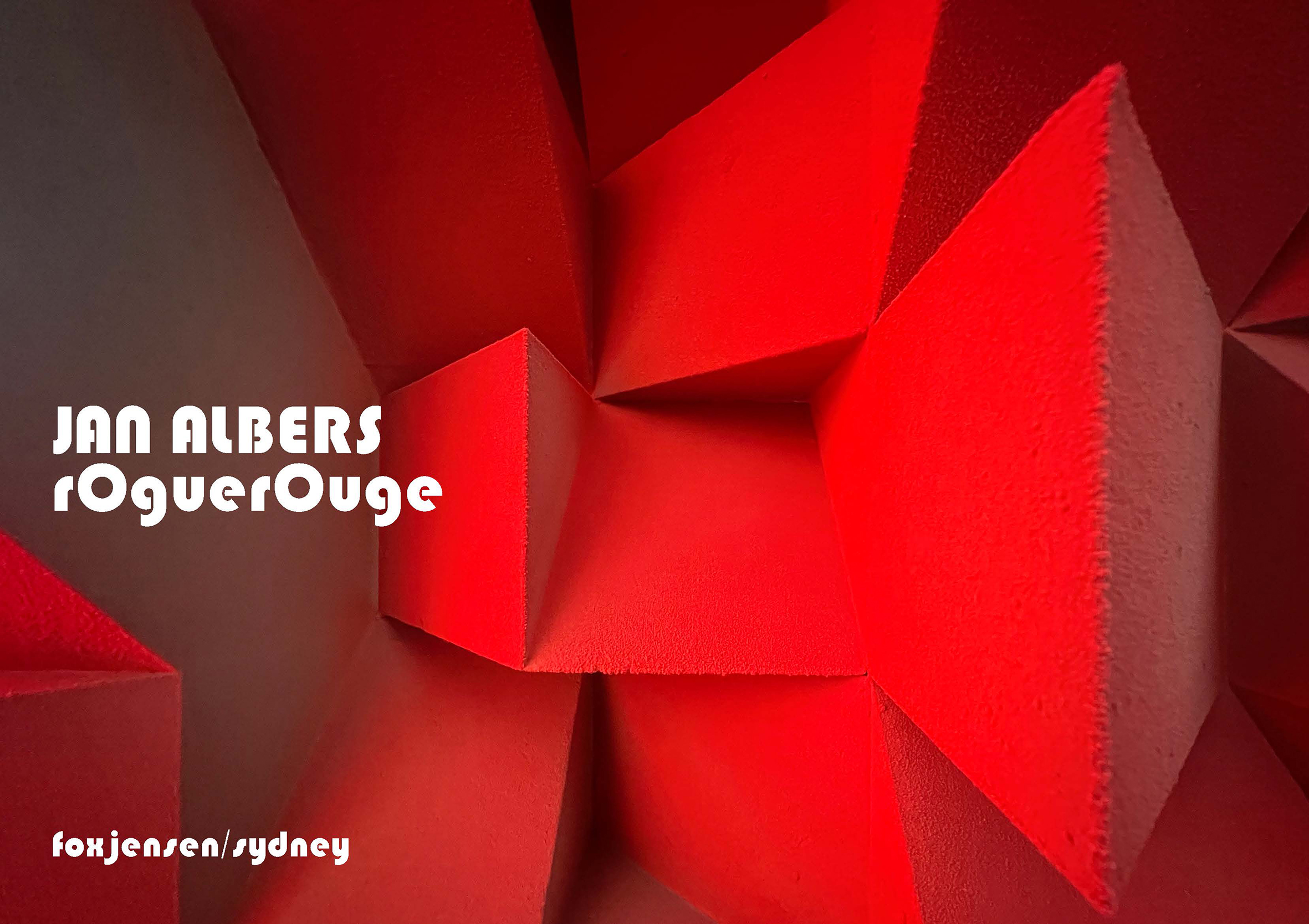
JAN ALBERS rOguerOuge
I’m looking over the wall, and they’re looking at me
Johnny Rotten Holidays In The Sun 1977
There have been few moments of such symbolic social and political union as the collapse of the Berlin Wall in 1989. With the demolition of this horrifying barricade came an almost universal restoration of hope and faith. Yet little more than 25 years later, one can hardly believe that a political rally in the re-drawn West, the so-called “land of the free,” could be fueled by the moronic chant to “build the wall.”
Amidst the Cold War, Johnny Rotten saw the Berlin Wall as a kind of modern stand-in for Nietzsche’s philosophy “When you stare into the abyss, the abyss stares back at you.” The implication being that accusations of moral decay and chaos are most often a reflection of one’s own character. The wall is less a wall than a mirror and that anxiety, inequities and corruption exist on both sides.
Jan Albers was just 18 when the Berlin Wall came down. By that time such was its promised potential for social and philosophical healing that Sir Elton had written Nikita and Nena had set free 99 Luftballons – so any chance it was going to outlast the Reagan and Gorbachov détente was slim. Popular culture had the bit between its teeth and Sir Elton was coming for Nikita despite the flagging resistance of ten tin soldiers.
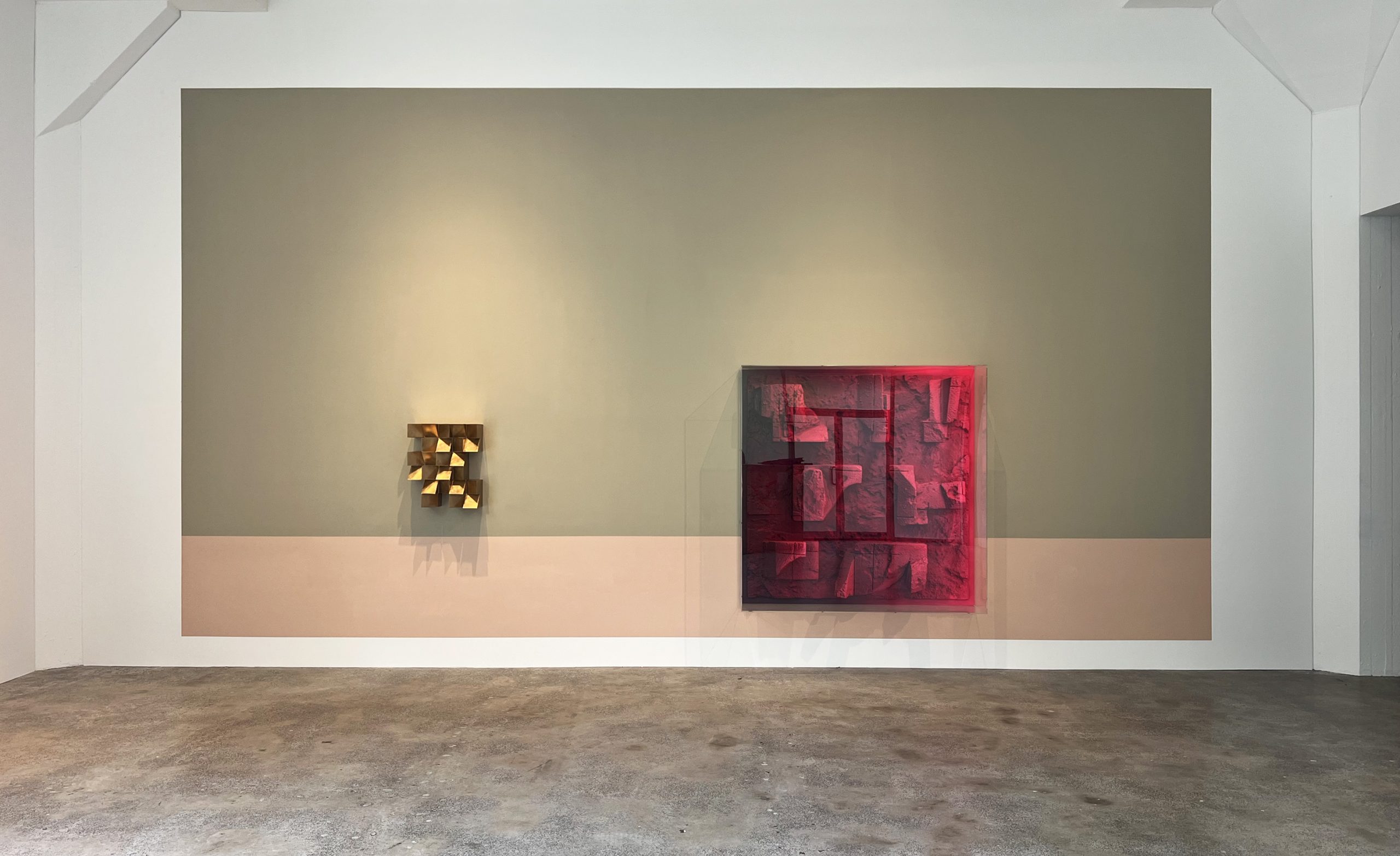
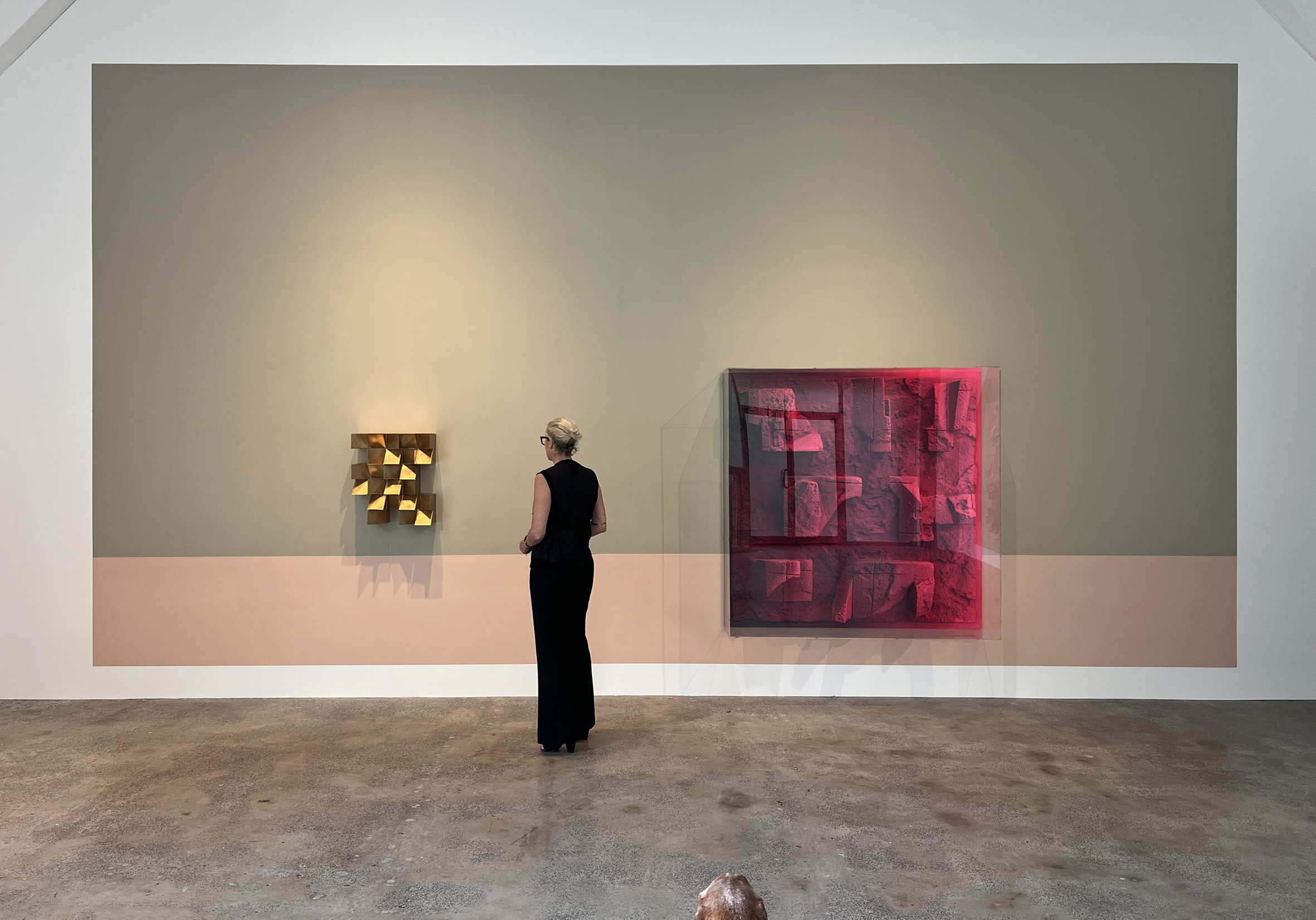
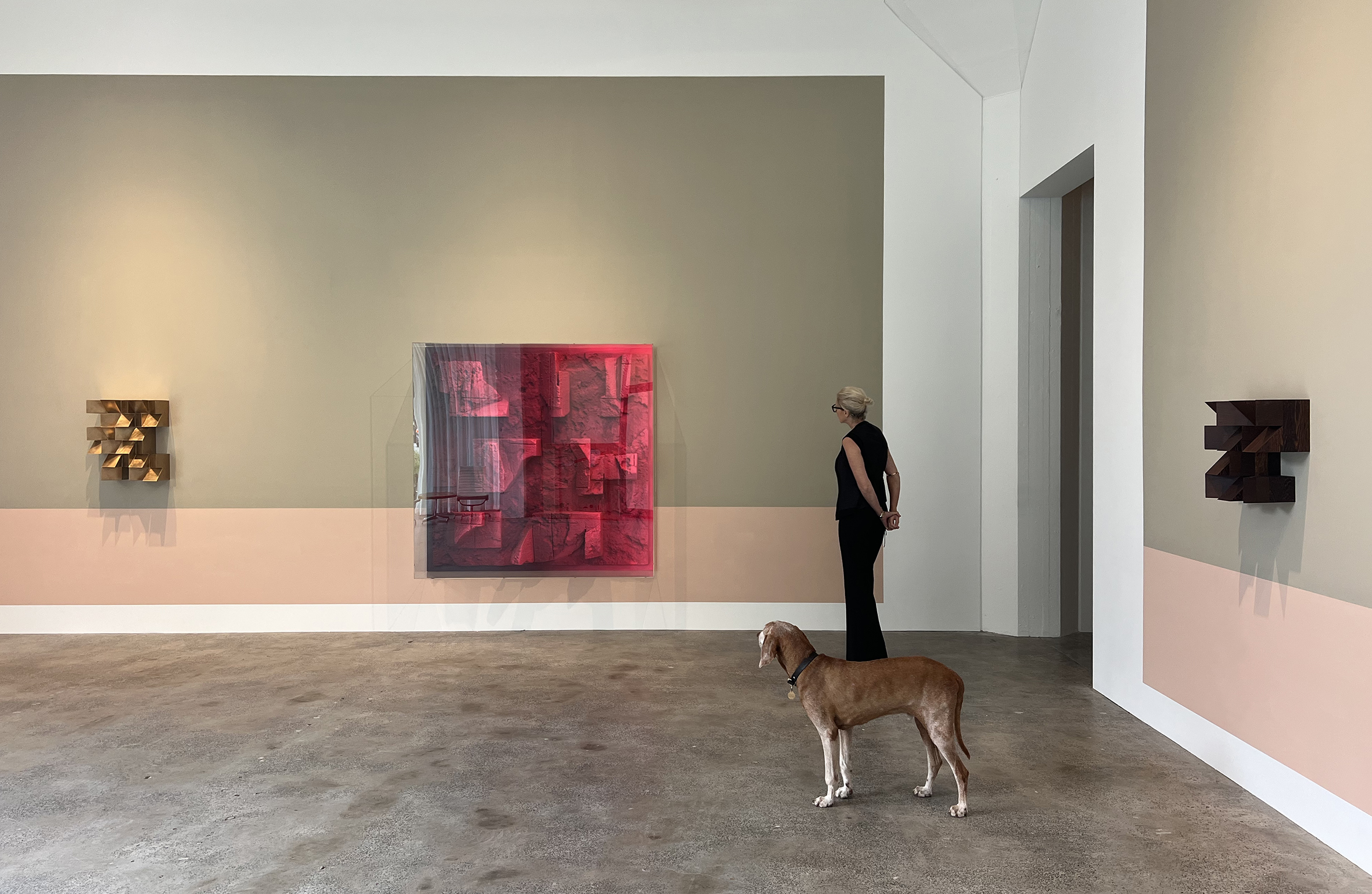
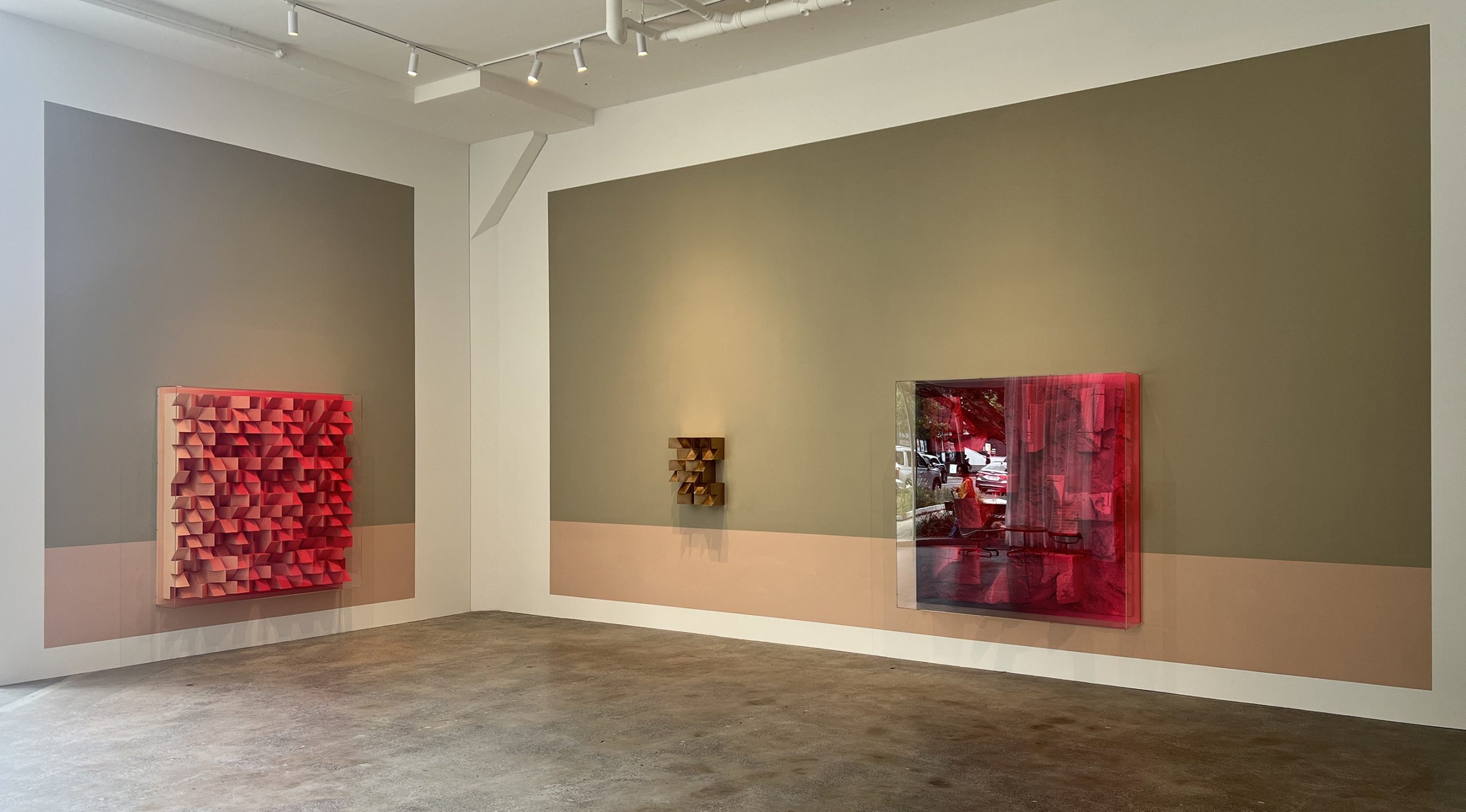
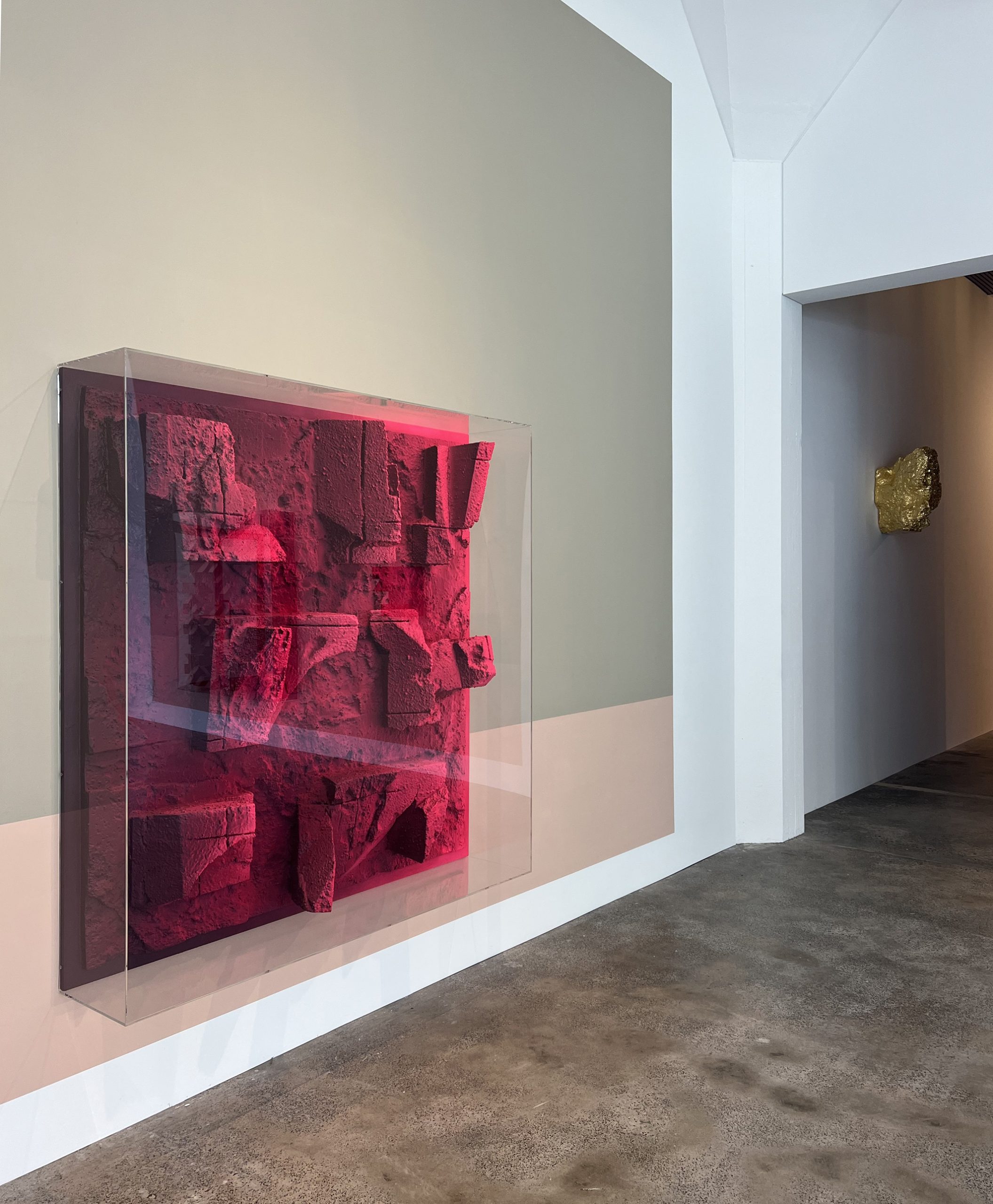
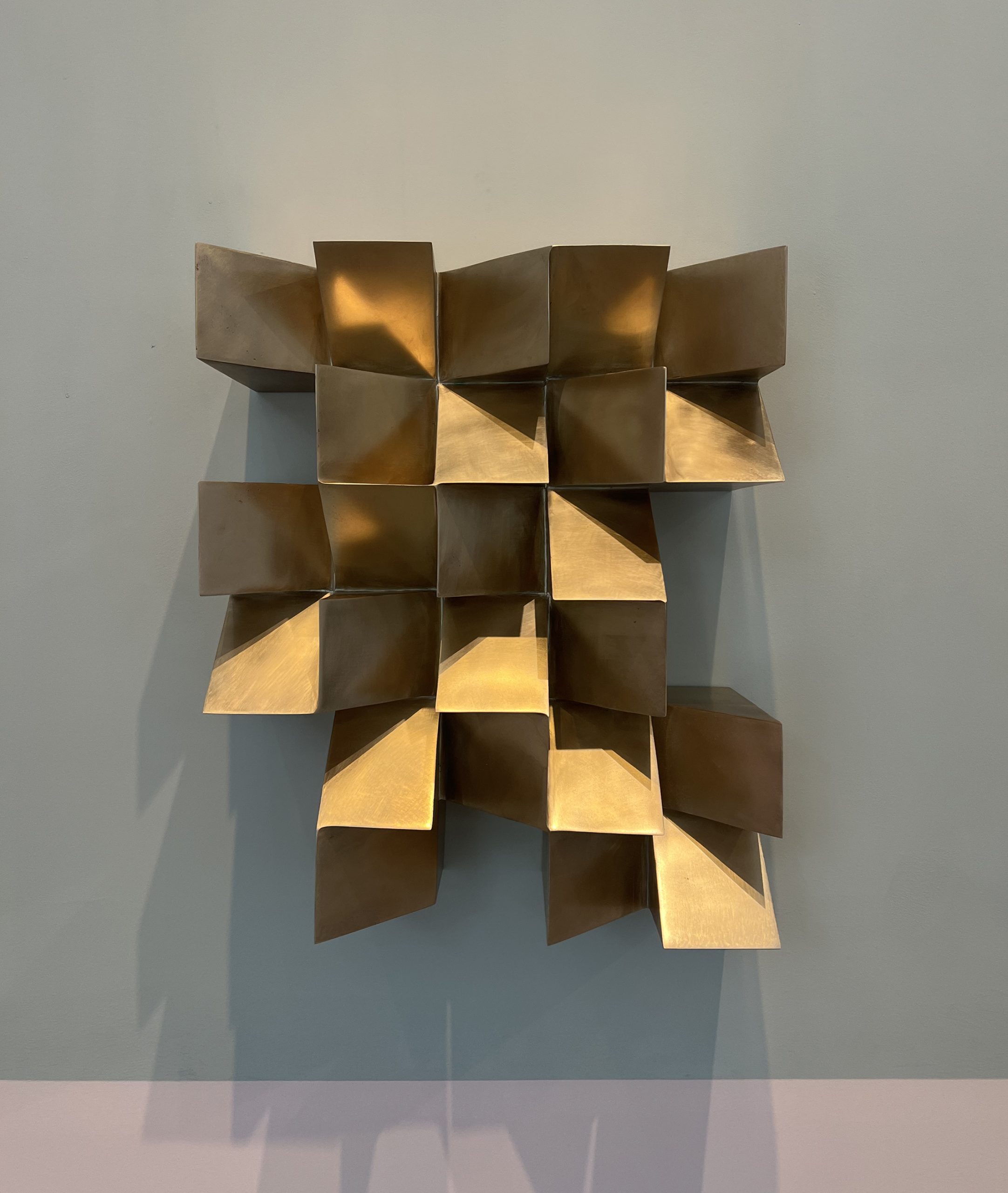
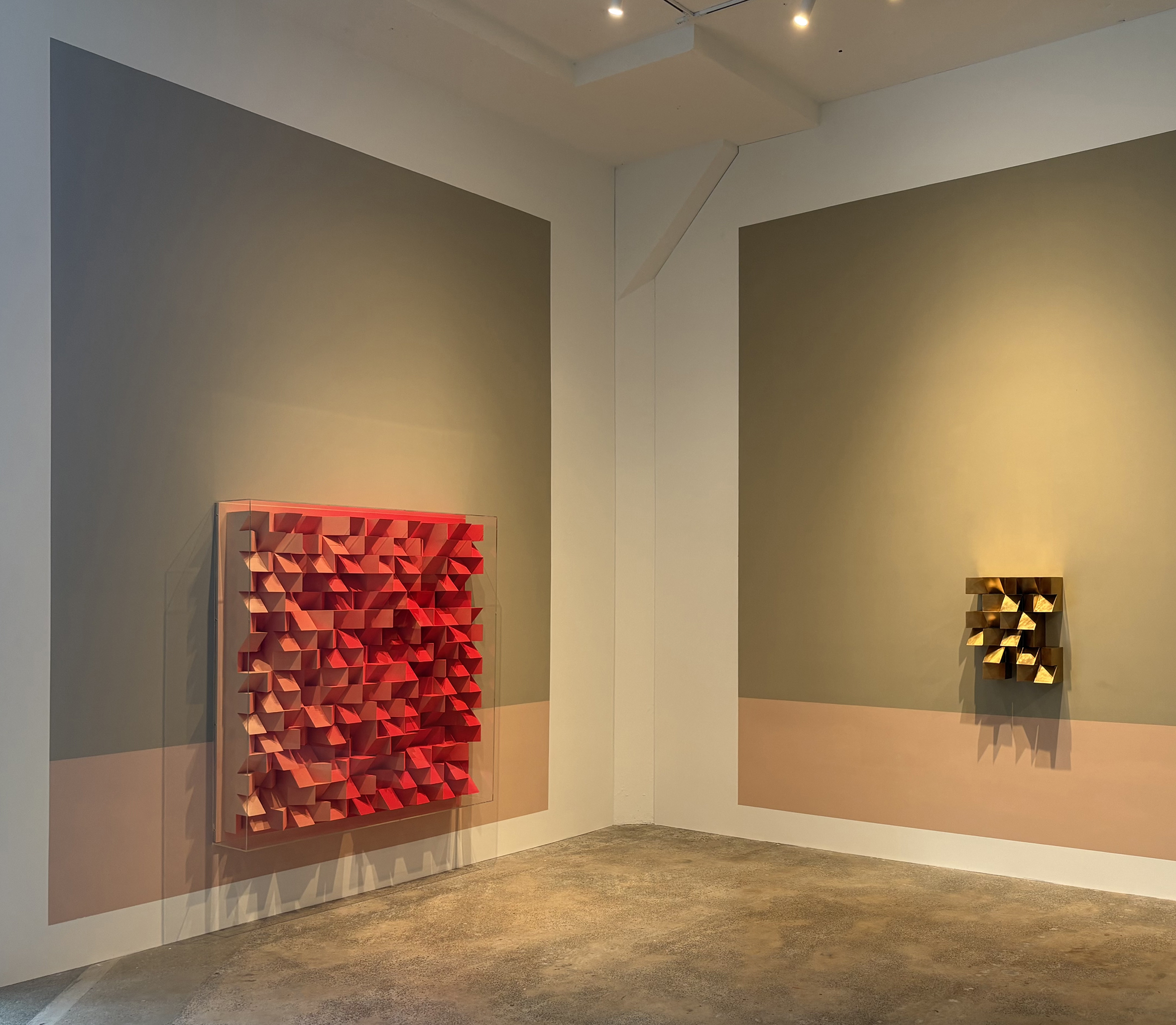
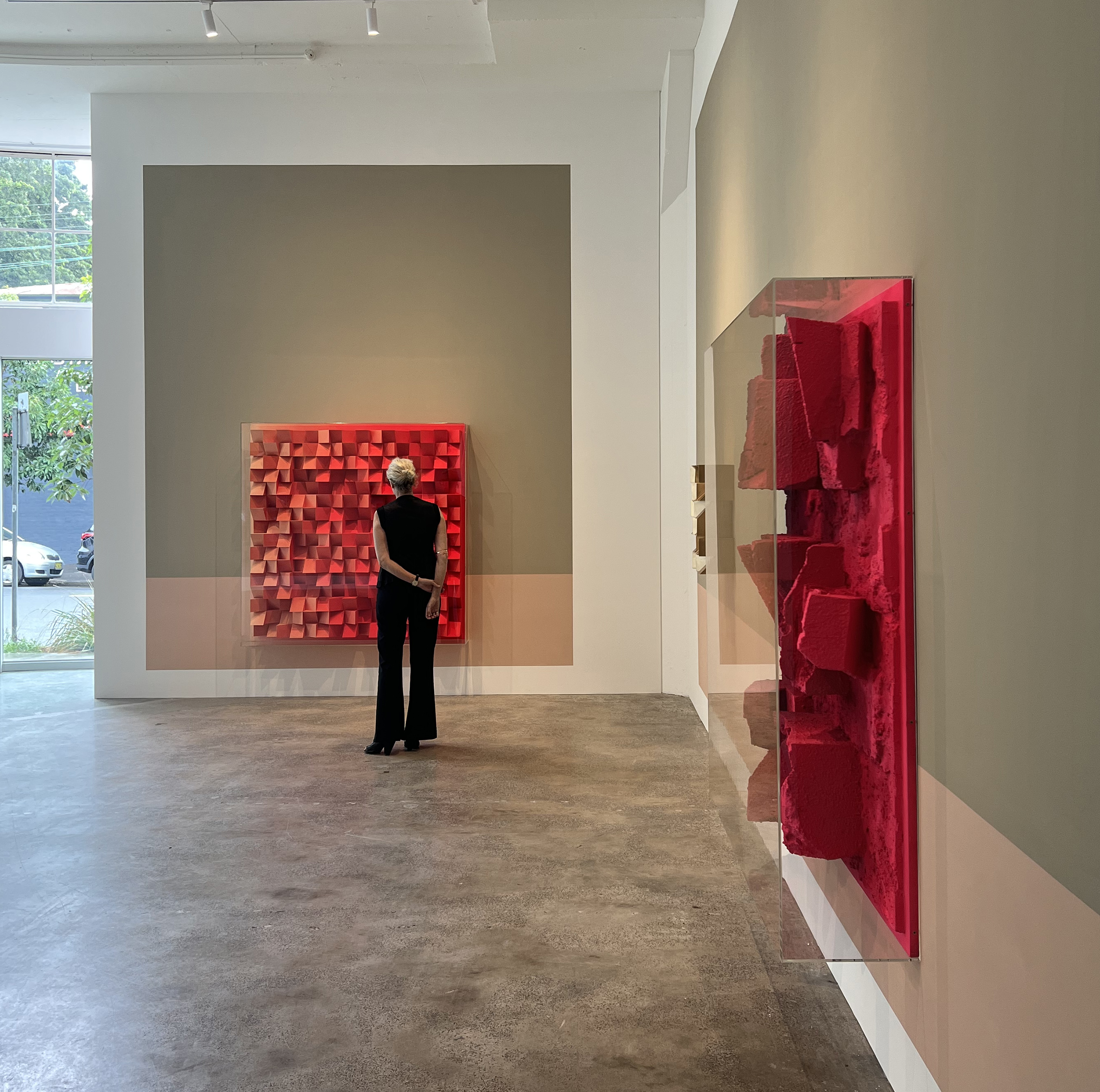
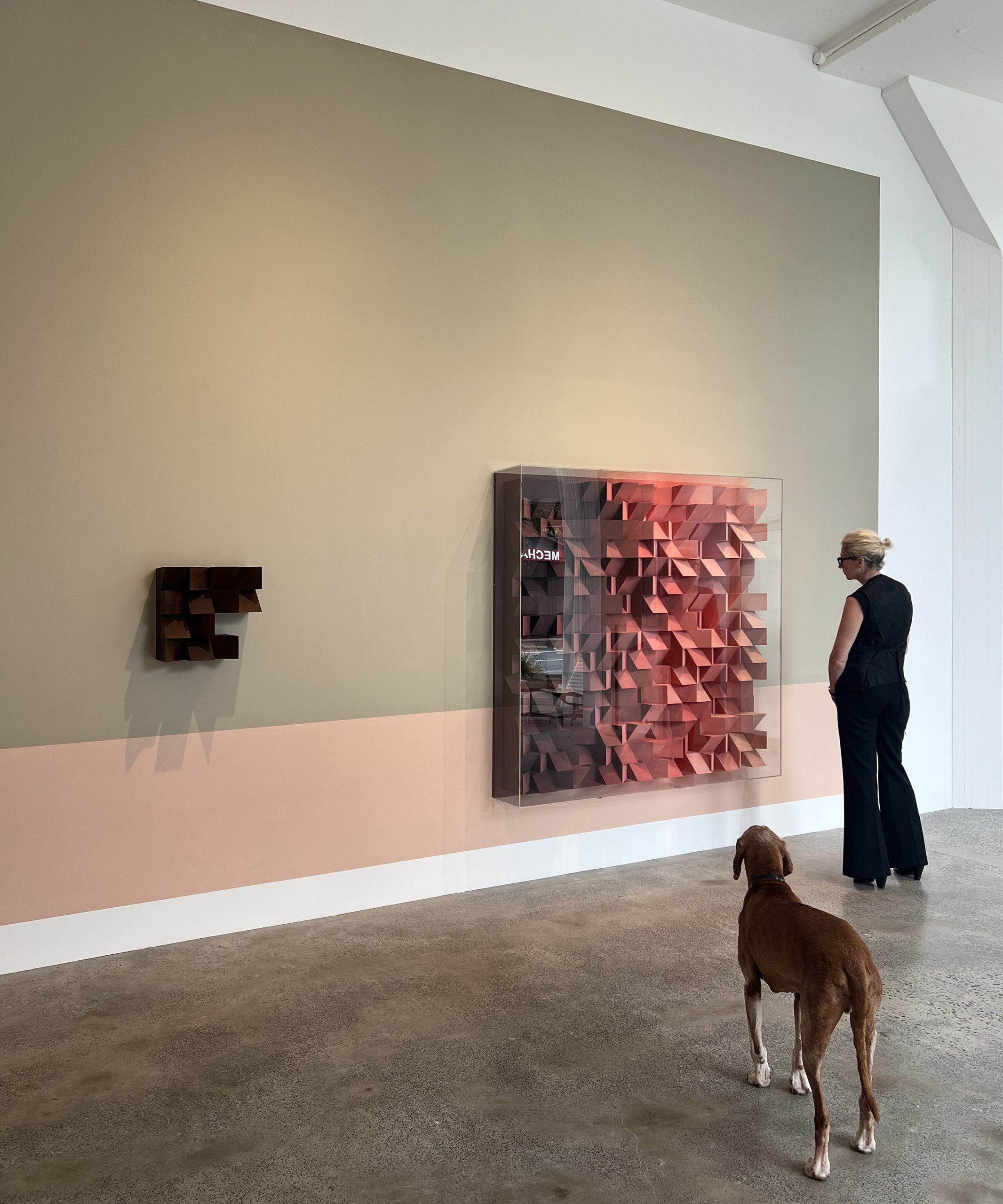
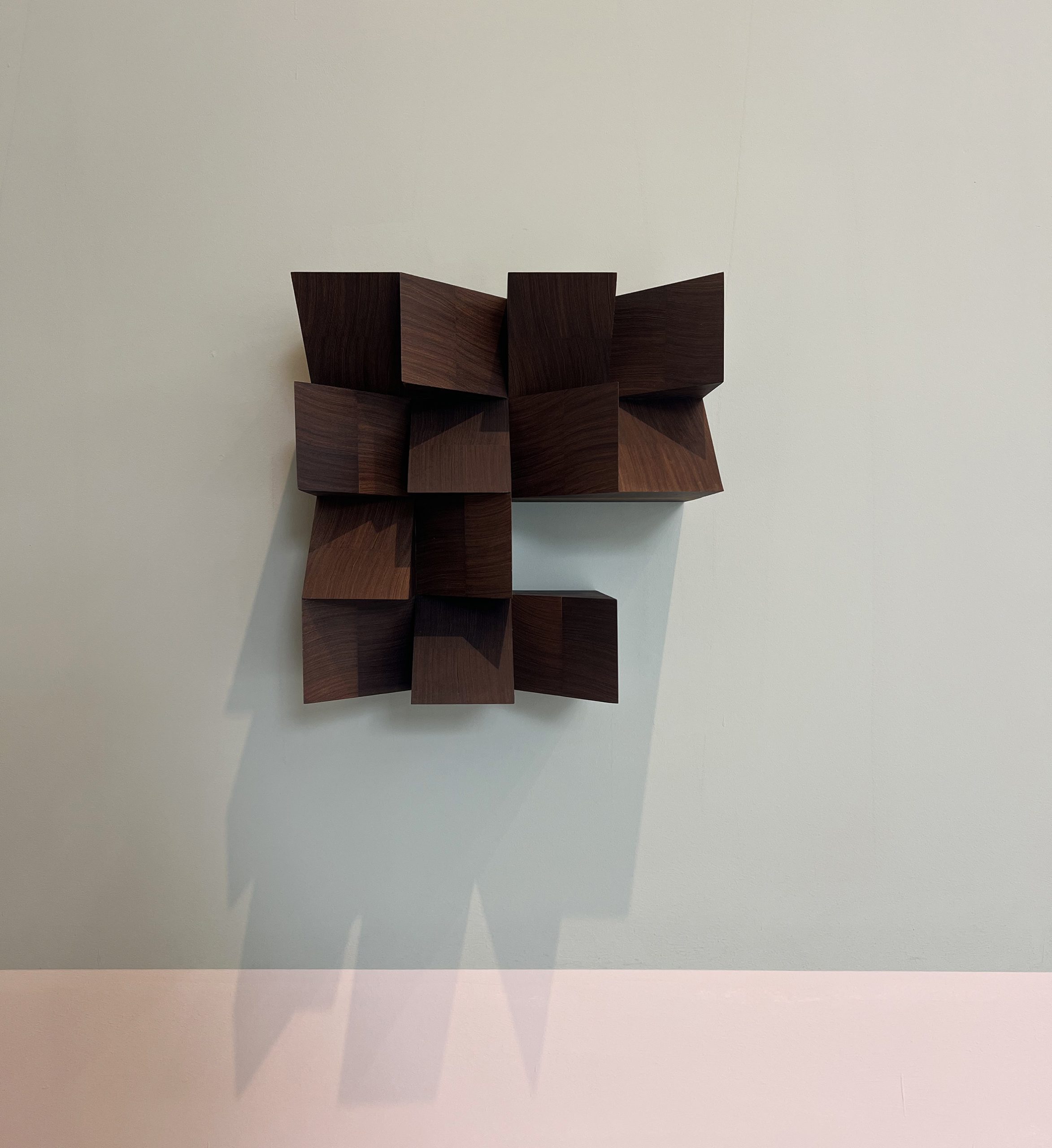
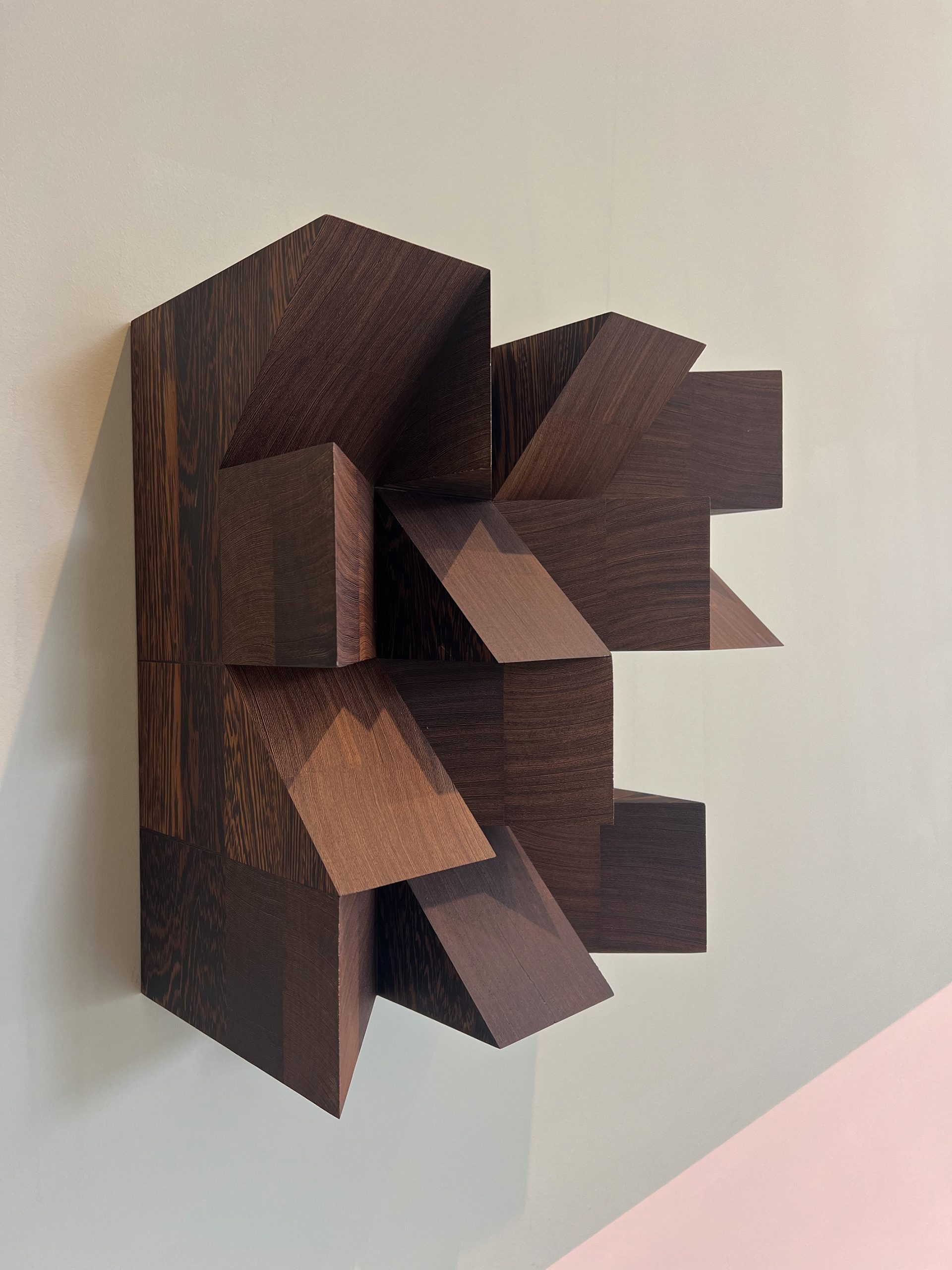
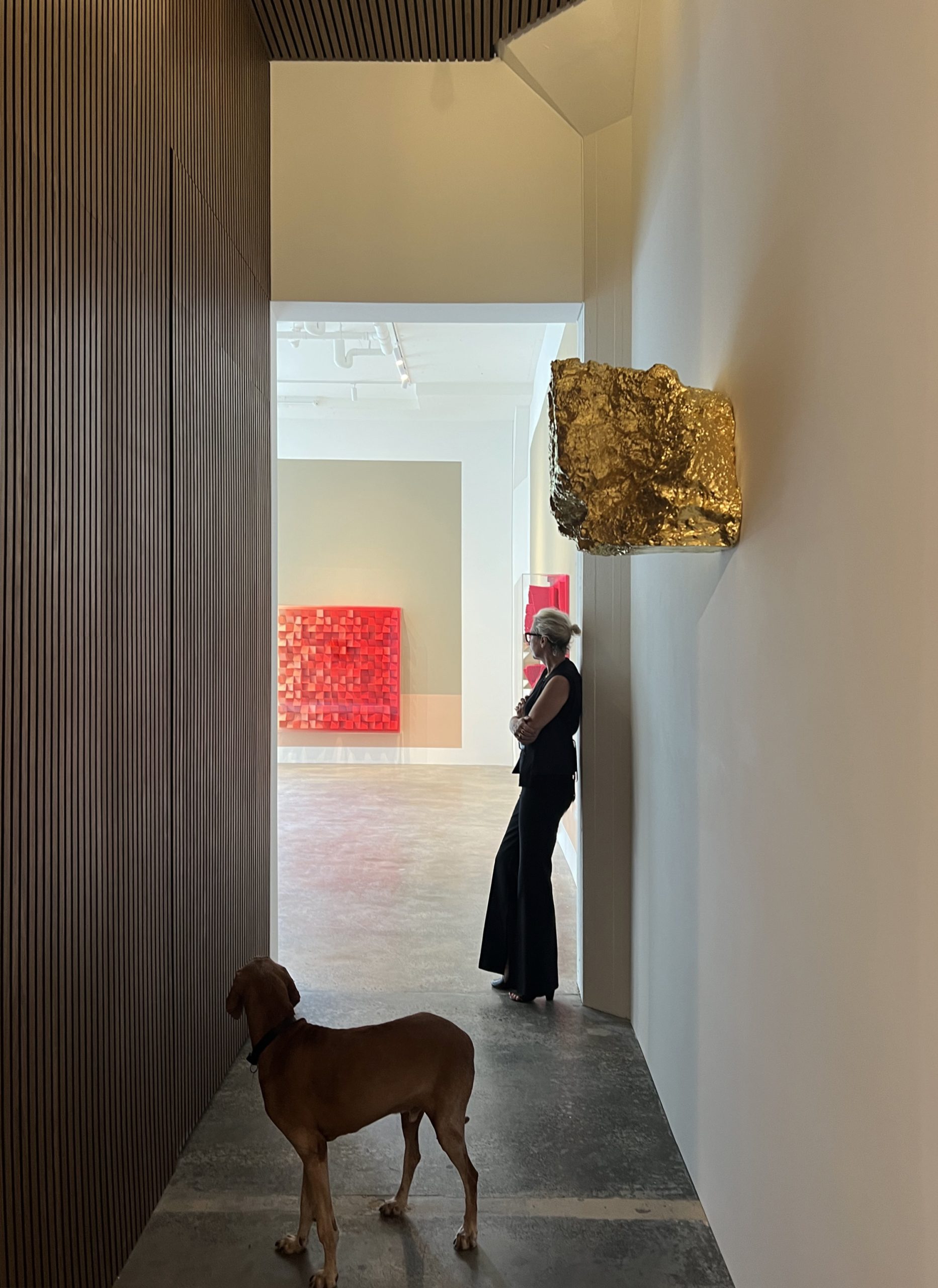
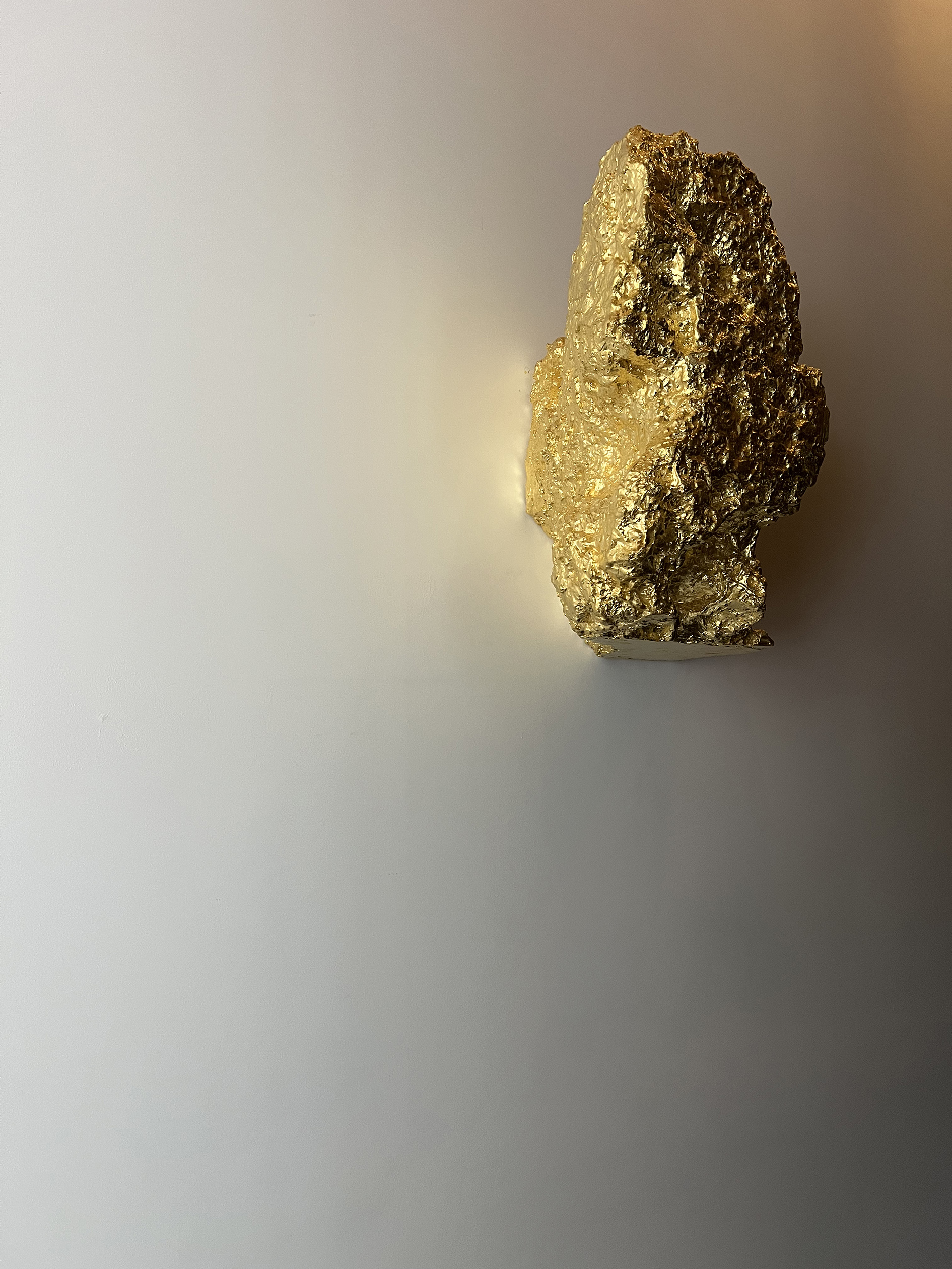
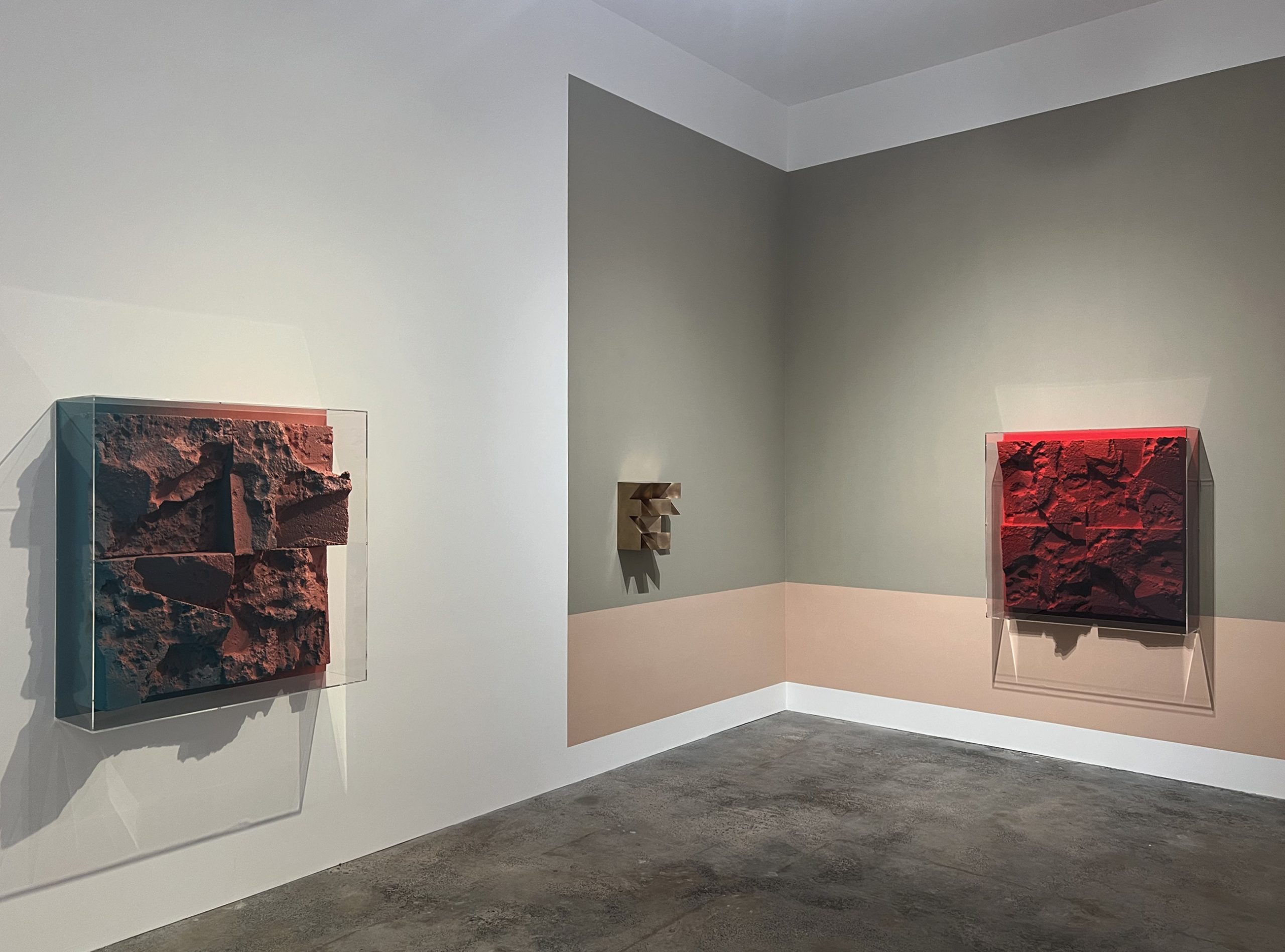
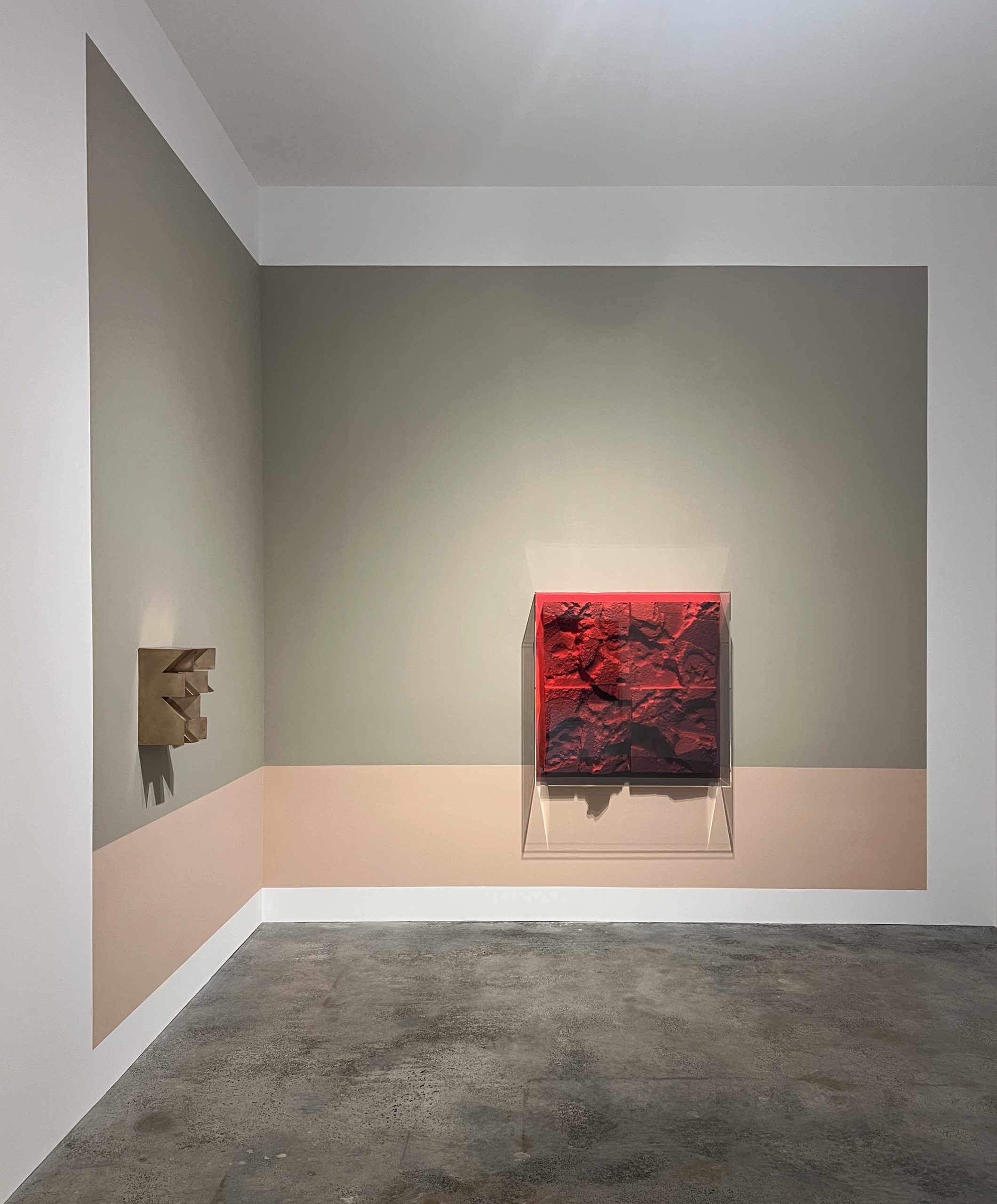
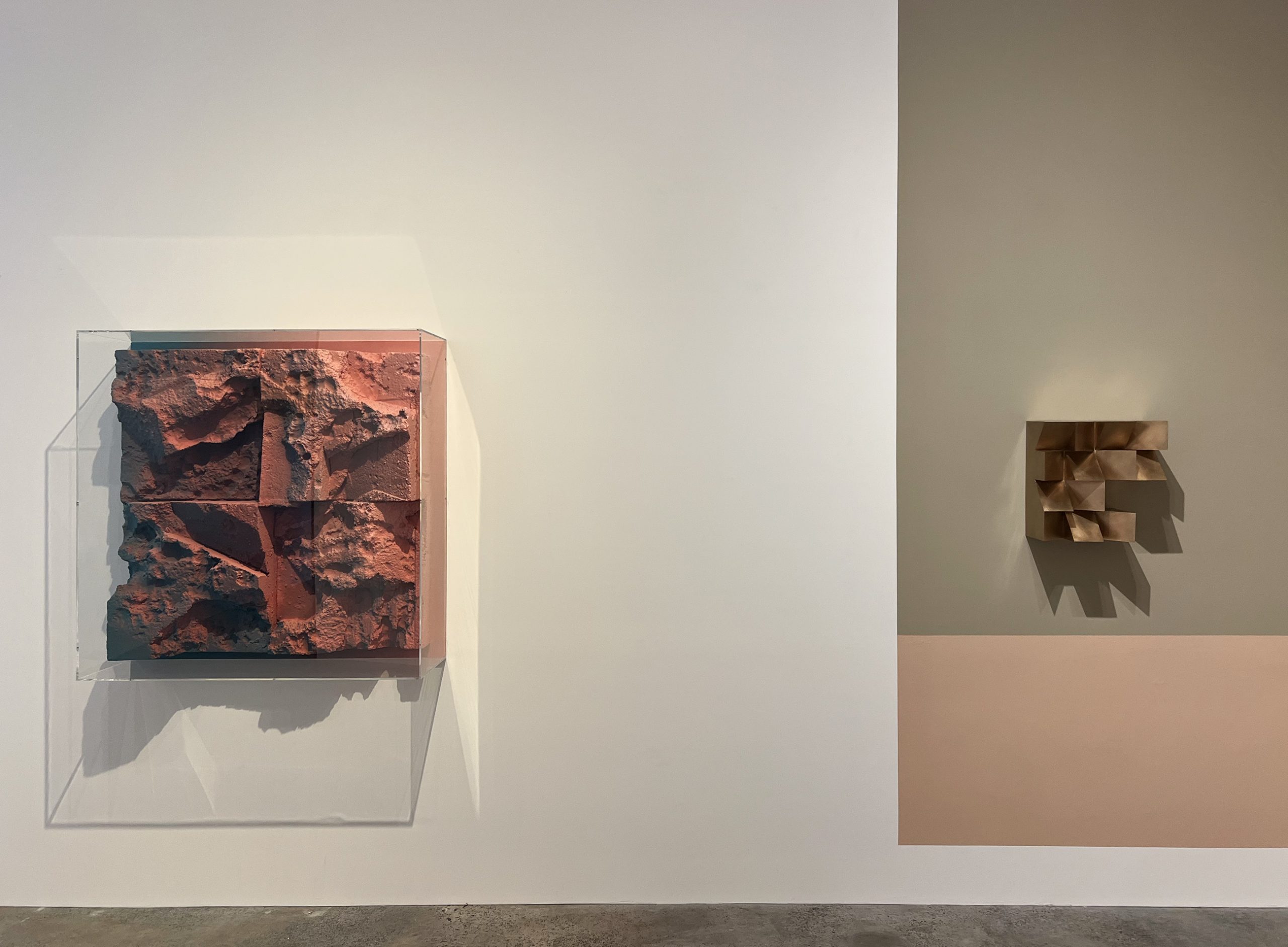
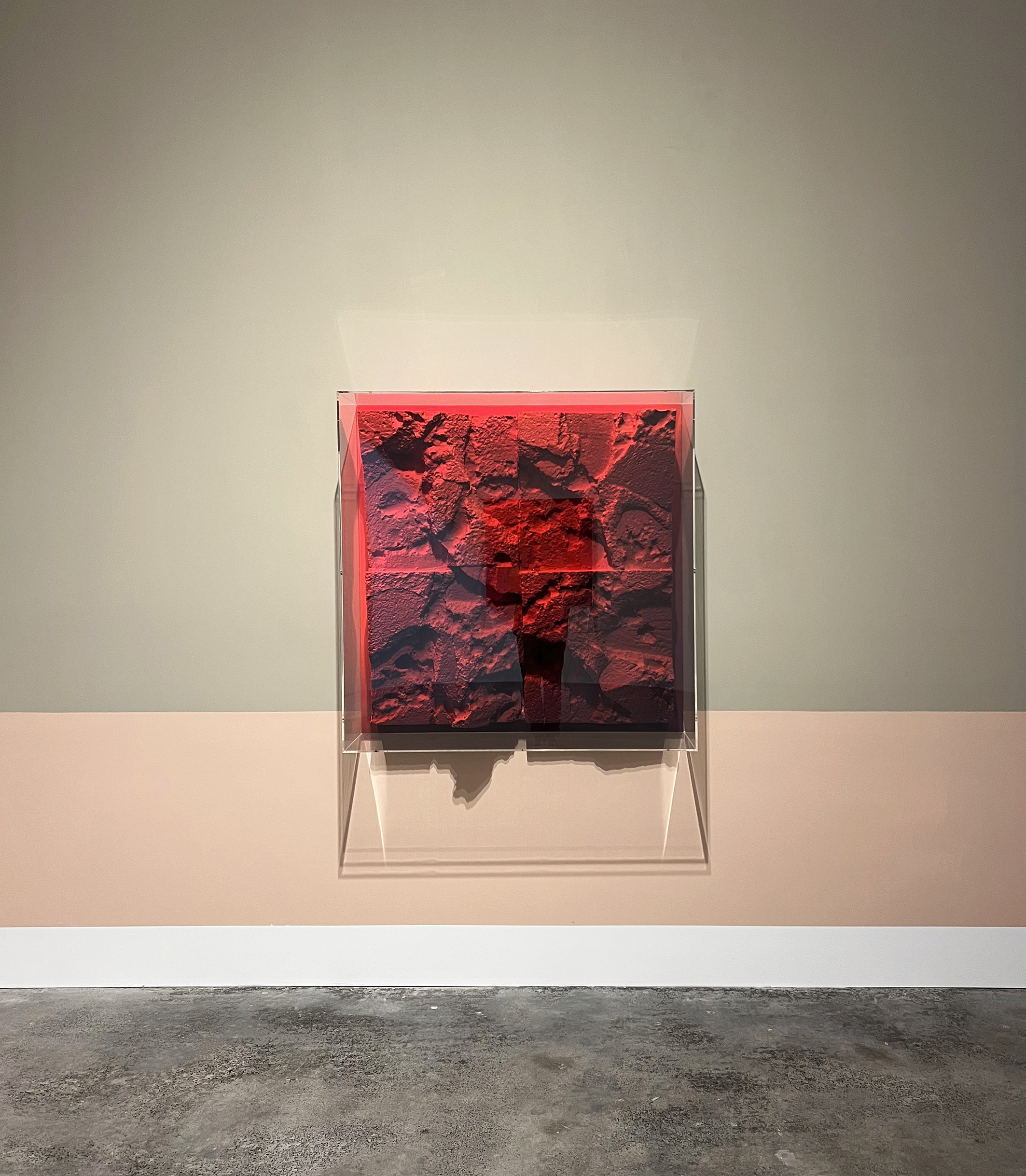
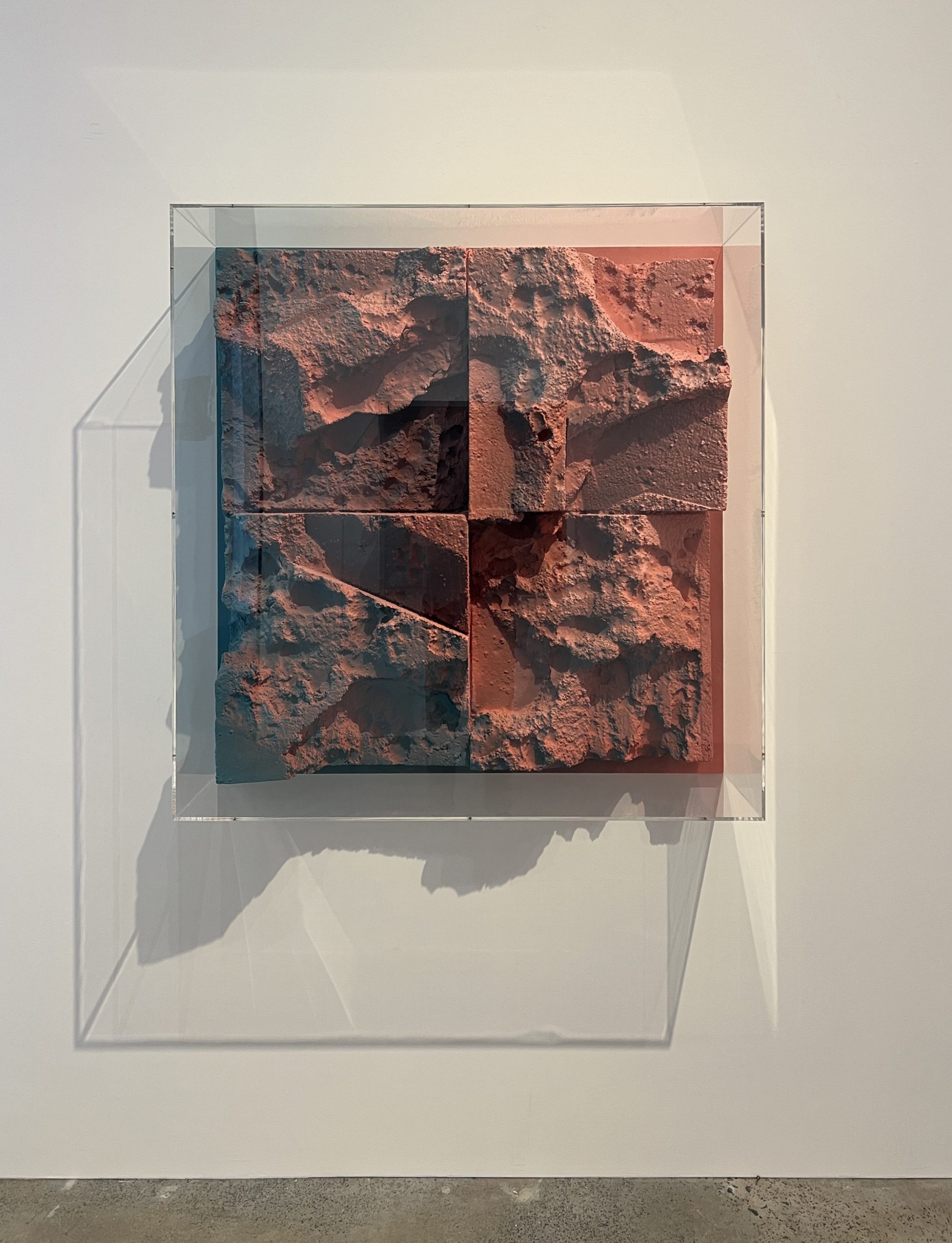
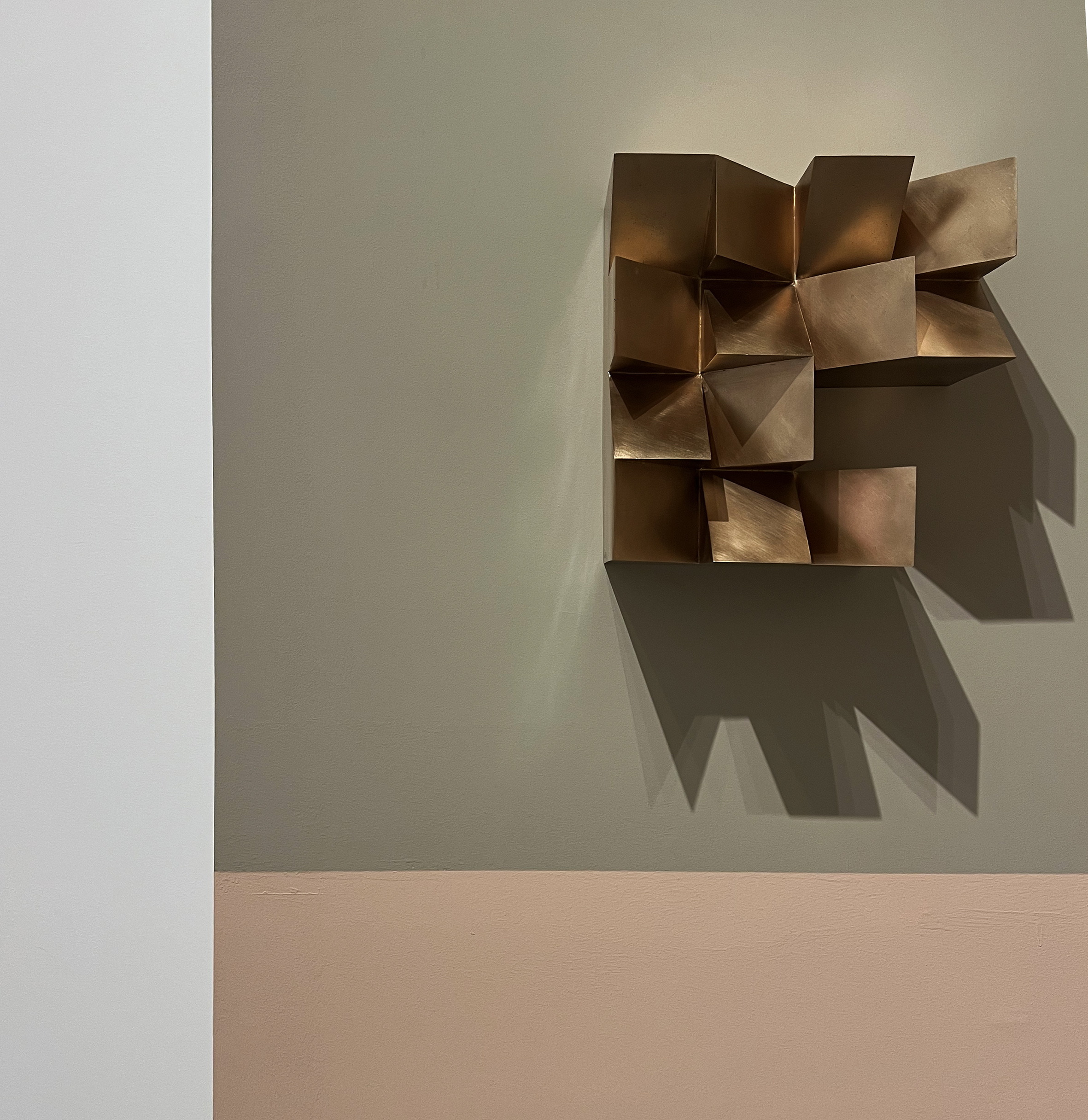
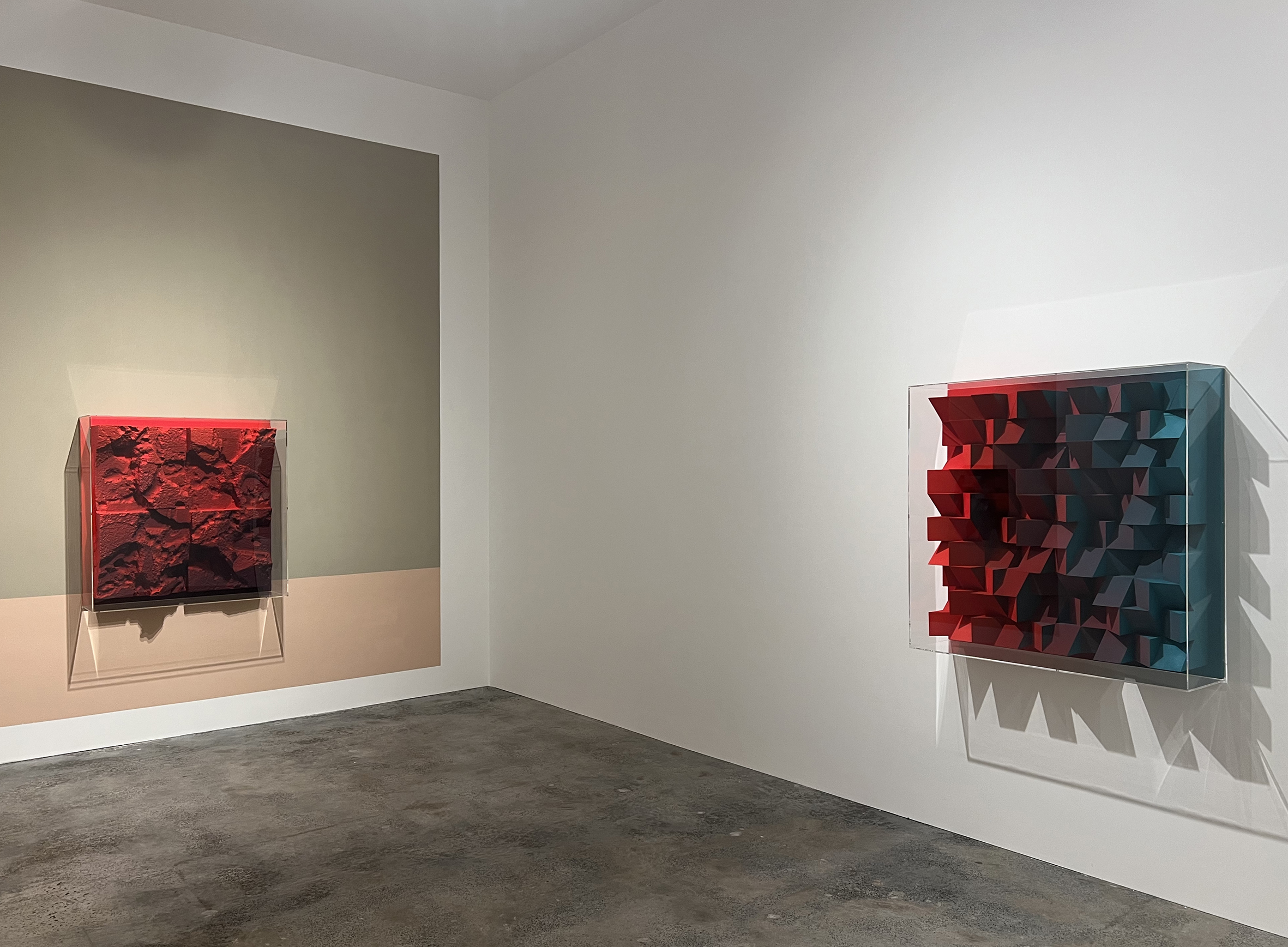
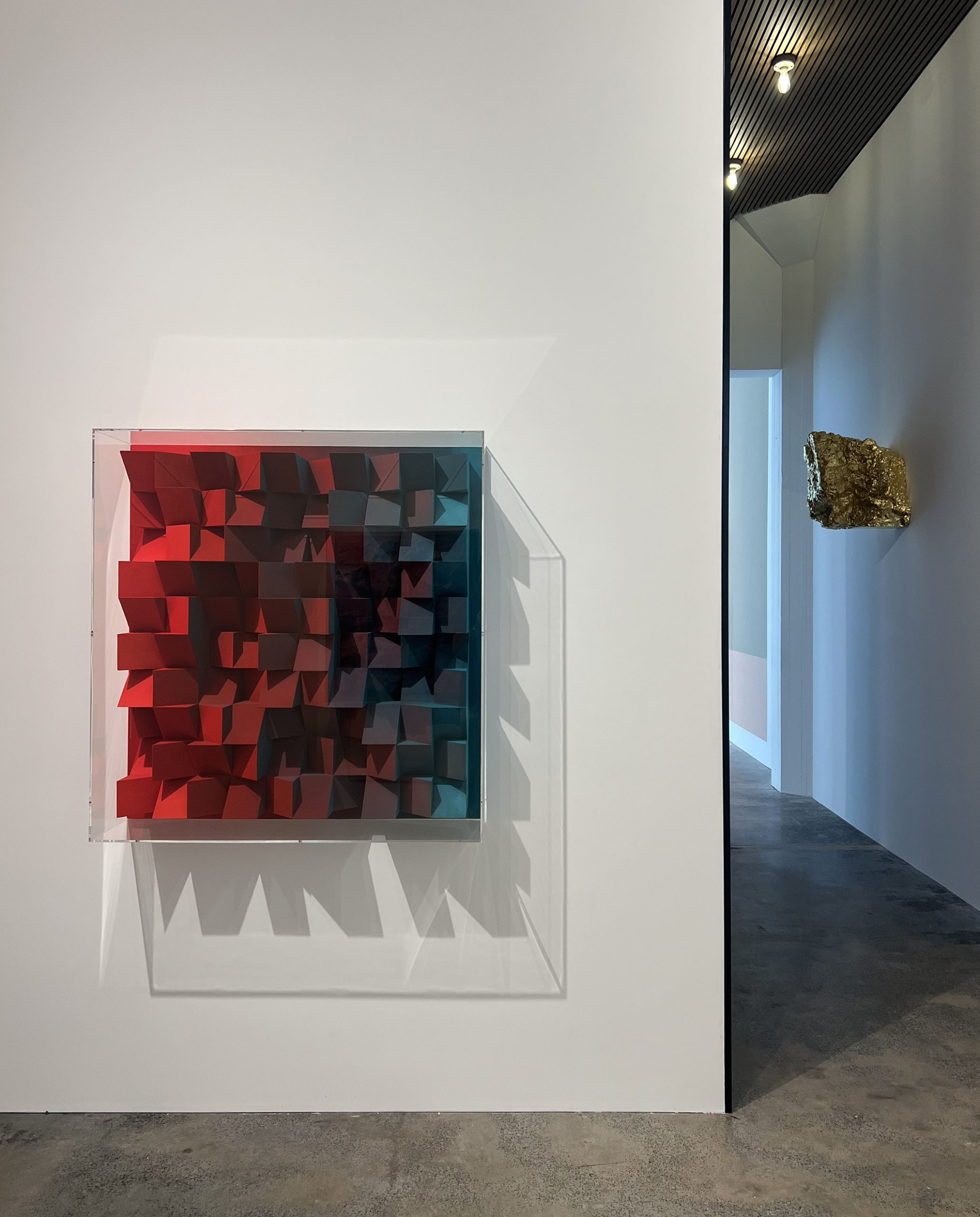
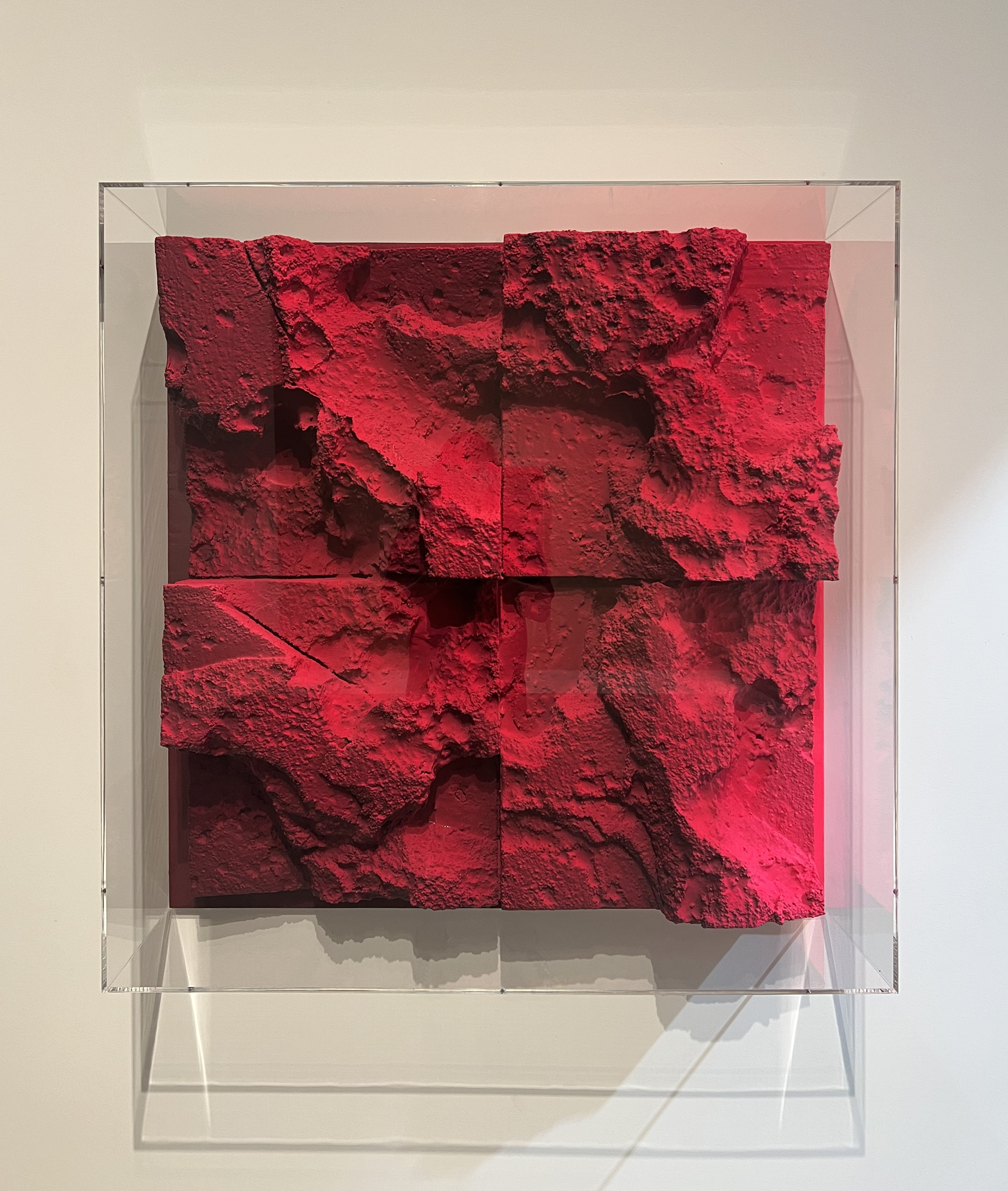
It is hard not to see Jan Albers’ grand chainsaw massacre works as fragment of a wall, be it Berlin or another. The sense of them being a geological remnant, a fragment from an earlier brutalist age is strong. His decision to enclose them in a clear Perspex box immediately shifts our perception of them from rubble to relic. The notion that an object might magically morph from raw or ‘found’ status to conceptual/aesthetic object by virtue of context is not new, of course. And though Albers certainly isn’t taking up the mantra of Dada, as a student at the Kunst Académie Dusseldorf, he adopted a post-punk approach to authority, and indeed to painting, preferring to cut, burn and even chain-saw his forms. Whilst these are sculptures that allude to mysterious artifacts, their repeated architectonic compositions, especially in the “wedges” imbues them with a crisper, even classical formality. Albers might’ve resisted the protocols of painting, certainly the ceremony of neatly folding linen corners, especially when the allure of setting to with a chainsaw or a flame-thrower beckoned. But what he couldn’t quite set aside were the fundamental attractions of colour and light. In this sense he is just as much a disciple of Monet as Duchamp…. Impressionism meets the concrete block.
It is Albers’ conflation of sculpture and painting that places his work in the lineage of Donald Judd and certain aspects of Imi Knoebel, both of whom, like Albers, seem dissatisfied with the confinements of painting. The desire to liberate painting from the easy seduction of the pictorial is vital for Albers’ work too, whether it takes the form of the faceted wedges, or the chainsaw massacres he is intent on escaping the restrictive orthodoxies that history establishes..
The hybridity of his approach gives the works a flamboyant contemporaneity and Albers himself sees the studio as a working Tardis that jettisons him into the future – to infinity and beyond. The desire to see one’s own work unshackled from history might appear to wilfully deny aspects of the works complex genealogy but Albers is determinedly forward facing in all that he does. For all their connections these are artifacts from the future.